




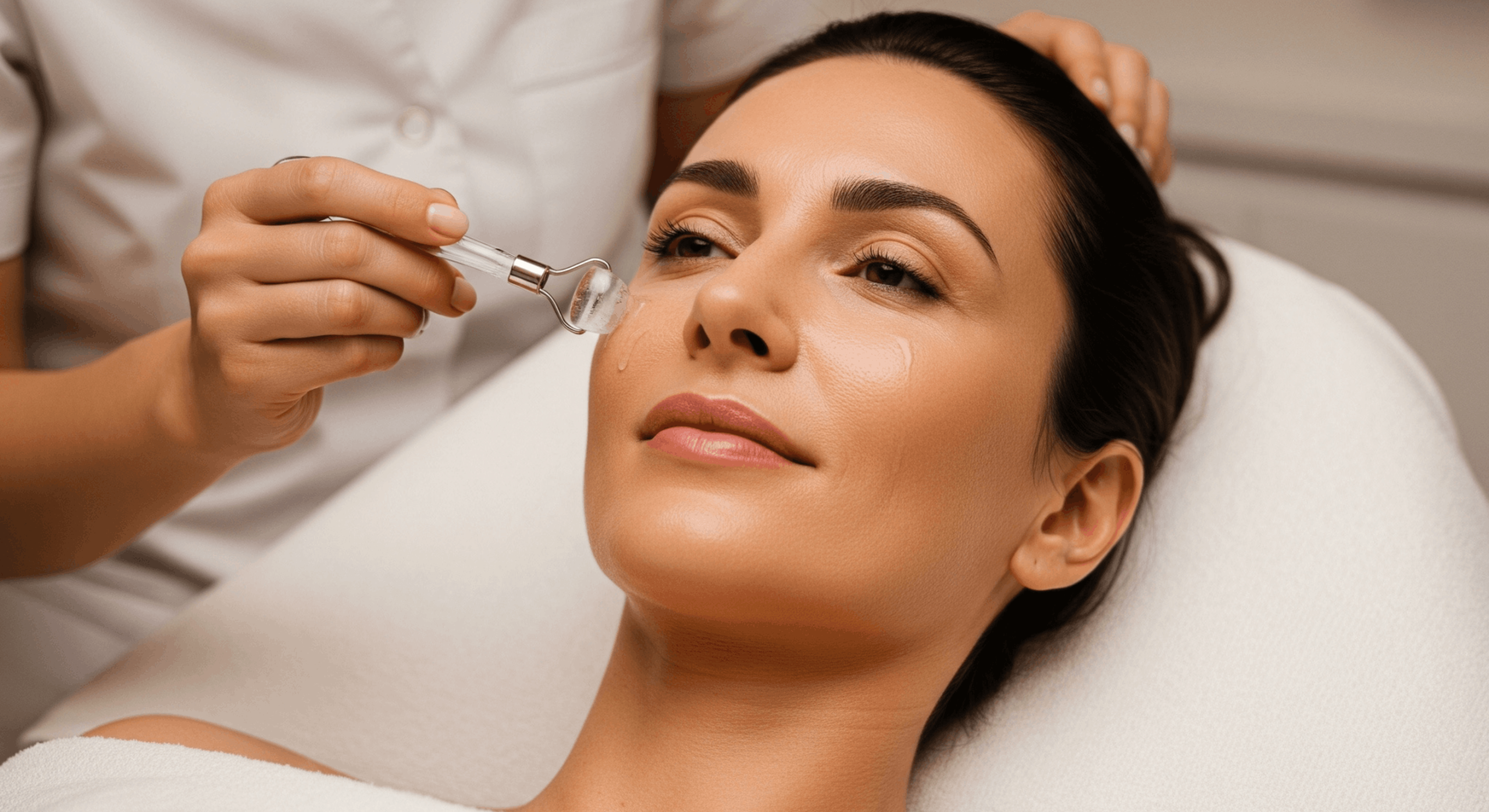


Blepharoplasty – Youthful, Restful and Bright Look

Blepharoplasty: The surgery that renews the look
Blepharoplasty is one of the most common cosmetic surgery procedures and is the ideal solution for those who want to address sagging eyelids, bags under the eyes, and a tired look.
Over time, the area around the eyes loses its elasticity. The upper eyelid may begin to droop, while bags, puffiness, and wrinkles appear on the lower eyelid. The result is that the face looks more tired and older, even when you feel well-rested.
Blepharoplasty restores the freshness of the gaze, offering a more youthful, bright and rested appearance.
What is blepharoplasty?
Blepharoplasty can improve:
Upper eyelid drooping
Excess skin on the eyelids
Bags under the eyes
Periorbital fat
Tired look
Ρυτίδες κάτω βλεφάρου
Muscle relaxation in the eye area
Visual difficulty when drooping upper eyelid limits vision
What problems does blepharoplasty correct?
The operation is an ideal choice when there is:
Local accumulation of fat under the chin
Prolapse
Alteration of the contour of the lower jaw
Heavy neck
Disproportionate fat accumulation due to heredity
Local fat that does not subside with diet and exercise
Possible complications
Complications in blepharoplasty are rare and usually easily treated.
Possible complications are:
Small sebaceous cysts
Asymmetry in scar healing
Transient diplopia
Change in the shape of the eyelids
Hematoma formation
Choosing an experienced plastic surgeon significantly reduces the chance of complications.
What to watch out for after blepharoplasty
In the first days after surgery it is recommended:
Avoid long hours of TV or computer use
Do not do strenuous exercise.
Apply cold compresses according to instructions.
Use the eye drops recommended by your doctor.
Wear sunglasses during the day
Avoid wearing makeup until your doctor gives you permission.
Women can usually apply makeup to the area about a week after surgery.
Blepharoplasty for a look that looks rested again
Blepharoplasty is an effective procedure that can dramatically renew the appearance of the face, correcting sagging eyelids and bags under the eyes.
With proper planning, an experienced plastic surgeon and a natural aesthetic approach, the result is a brighter, more youthful and rested look, without altering the facial expression.
Text 1

Before
After
Text 2

Before
After
Podcast Area
Stay informed about what interests you.
Advantages of blepharoplasty
Gives a more rested and youthful look
Removes excess skin
Reduces bags under the eyes.
Improves overall facial expression
It can improve vision in cases of significant upper eyelid drooping.
The incisions are placed in places that are not easily visible.
The results last for many years
The return to everyday life is relatively short
It can be done individually or combined on the upper and lower eyelids.
Who are suitable candidates?
Suitable candidates for blepharoplasty are men and women over 35 years of age who are in good general health and have sagging or excess skin in the eyelid area.
In some cases, blepharoplasty can also be performed on younger individuals, when there is a hereditary predisposition, severe bags under the eyes, or drooping upper eyelid that makes vision difficult.
The procedure is not recommended without careful medical evaluation for people with serious health problems, diabetes, hypothyroidism, or eye conditions that require examination by an ophthalmologist.
Text 1
Before
After
Text 2
Before
After
Podcast Area
Preparation before blepharoplasty
Before the operation, the plastic surgeon takes a detailed medical history and examines the eye area.
Particular attention is paid to:
Allergies
Dry eye problems
Glaucoma
Retinal detachment
Previous eye surgeries
Taking anticoagulant medications
If there is a history of glaucoma or retinal detachment, an examination by an ophthalmologist is required before blepharoplasty.
If you are taking anticoagulant medication, the doctor may request a temporary interruption for a few days to reduce the risk of complications.
Are the results permanent?
The results of blepharoplasty last for many years.
In the upper eyelid area, over time and due to normal aging, excess skin may reappear and the surgery may need to be repeated.
In the lower eyelid area, the results are more permanent, as bags and excess fat are treated more definitively.
Text 1
Before
After
Text 2
Before
After
Podcast Area
Useful information about treatment
| Information | more Information |
|---|---|
| Type of procedure | Upper and/or lower eyelid blepharoplasty |
| Anesthesia | Local with anesthesia or general |
| Duration of surgery | 1-3 hours |
| Hospitalization | Usually not required |
| Returning home | A few hours later |
| Suture removal | Approximately in 5 days |
| Ink fade | About 1 week |
| Back to makeup | After about 1 week |
| Return to everyday life | Gradually, over the course of a few days |
| Duration of effect | Many years |
Text 1
Before
After
Text 2
Before
After
Podcast Area
Where are the incisions made?
The incisions are designed in such a way as to be as inconspicuous as possible.
In upper blepharoplasty, the incision is made within the natural crease of the eyelid. Initially, it may be visible when the eyes are closed, but over time the scar fades and becomes inconspicuous.
In lower blepharoplasty, the incision is made just below the eyelashes and is not easily noticeable.
When access is made internally from the eyelid conjunctiva, there are no external signs.
Upper or lower blepharoplasty?
Blepharoplasty can be performed individually or in combination.
If the problem is located only in the upper eyelid, an upper blepharoplasty is performed. If it only concerns the bags or the lower eyelid, a lower blepharoplasty is performed.
In most cases, however, sagging and signs of aging affect both areas, which is why combined upper and lower eyelid blepharoplasty is often performed.
How long should I wear the special corset?
The special pressure dressing is worn continuously for approximately 7 to 10 days.
Its use is particularly important, as:
reduces swelling
it helps in the proper re-adhesion of the tissues
contributes to shaping the final result
Improper use may increase the likelihood of hematoma formation.
frequently asked questions
Does blepharoplasty hurt?
Not particularly. The surgery is performed under anesthesia and postoperative discomfort is usually mild and subsides within a few days.
When are the stitches removed?
The stitches are removed approximately 5 days after the surgery.
When do bruises go away?
Bruises usually subside within about a week.
When can I return to my daily routine?
The return occurs gradually within a few days, depending on the extent of the surgery and healing.
Will the scars be visible?
The incisions are made in the natural folds of the eyelids or beneath the eyelashes, so that the scars are inconspicuous.
Can I have only upper or only lower blepharoplasty?
Yes. The surgery can only be performed in the area where there is a real problem.
Are the results permanent?
The results last for many years. On the lower eyelid they are more permanent, while on the upper eyelid they may need to be repeated after years due to normal aging.
Belly
Thighs
Glutes
Arms
Back
Sides
Knees
How is blepharoplasty performed?

Step 1: Anesthesia
The procedure is usually performed under local anesthesia and sedation. In some cases, especially when combined with other procedures, general anesthesia may be chosen.
Step 2: Incisions in the upper eyelid
In upper blepharoplasty, the incisions are made in the natural crease of the upper eyelid, so that they are not easily visible.
Step 3: Correction of excess skin and fat
Excess skin and, where necessary, excess fat that causes swelling are removed.
Step 4: Incisions in the lower eyelid
In lower blepharoplasty, the incisions are made just below the eyelashes, so that they are naturally hidden.
Step 5: Fat removal and sagging correction
Periorbital fat is removed and muscle relaxation is corrected.
In cases where there is no sagging but only fat accumulation, the incision can be made internally, in the eyelid conjunctiva, without external marks.
advice before and after treatment
Advice before treatment
Tell the doctor about your medical history.
Αναφέρετε αν έχετε ξηροφθαλμία ή άλλη πάθηση των ματιών.
Please inform us of any allergies.
List all medications you are taking.
If you are taking anticoagulants, follow your doctor's instructions.
Complete the necessary preoperative checkup.
Post-treatment advice
Use cold compresses for swelling.
Wear sunglasses.
Avoid strenuous physical exercise.
Limit long-term screen use in the first few days.
Use the eye drops recommended by your doctor.
Do not apply makeup until you are given permission.
Follow the incision care instructions closely.